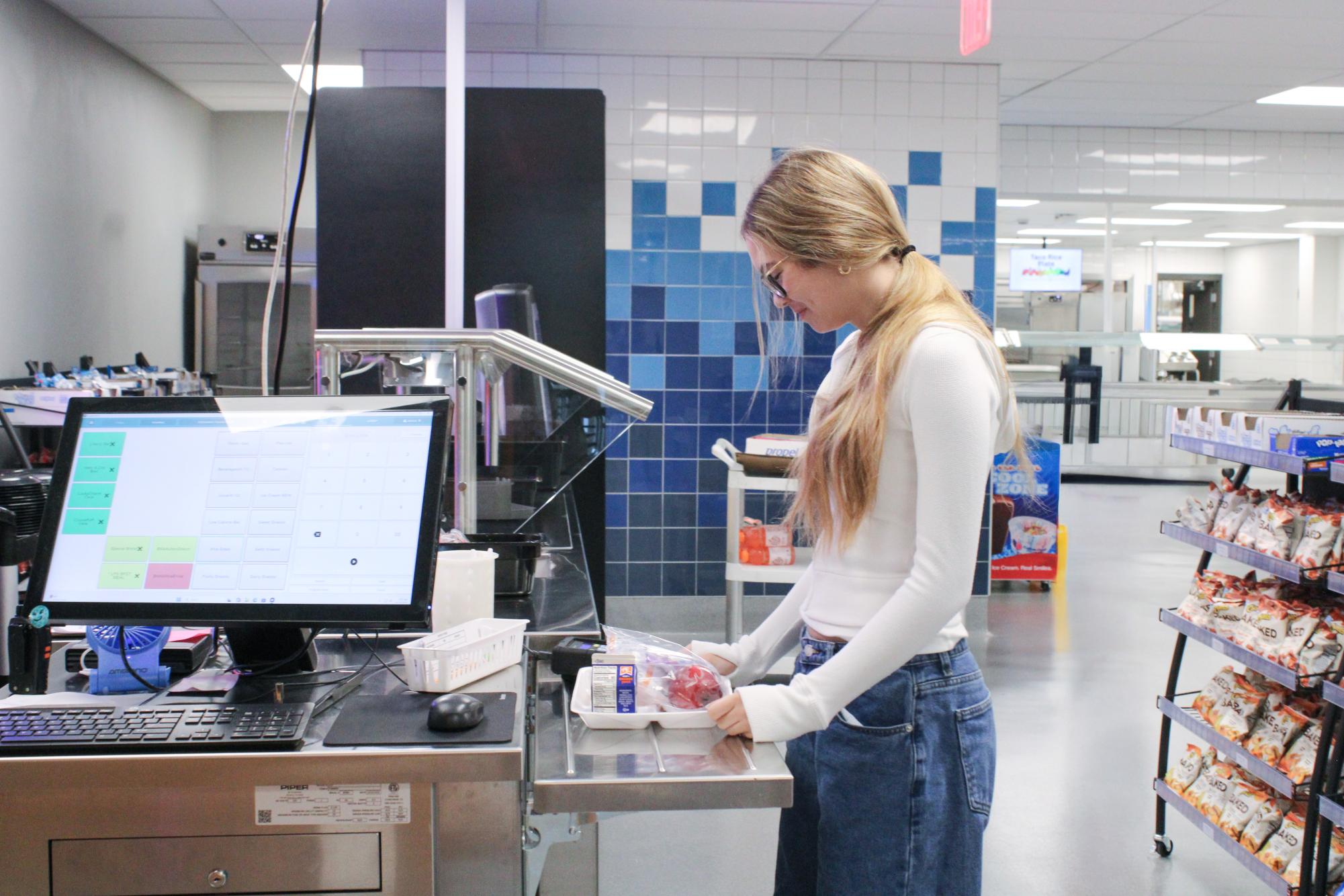

Across the nation, most students and families are expected to pay for school lunches. It can cost up to $556 per student for a year of school lunches, with $3.08 being the average price of one lunch. This number can rise for families with multiple children and students who eat breakfast at school.
The School Nutrition Association says nearly one in five children in America lives in homes without consistent access to adequate food. At Liberty, the number of students without access has increased over the last three years. Schools who provide equal and consistent access will ensure every child is equally fed and nourished.
“Parents won’t have to worry about having to provide food for their child. It gives them one less thing to worry about and one less thing to buy,” junior Madison Ly said.
The National School Lunch and Breakfast Programs indicate families with incomes below 130% of the poverty level receive free meals, while those between 130% and 185% of the poverty level receive reduced-price meals. Families over 185% have to pay full price. However, families with good incomes but multiple children may still suffer, as well as families who aren’t willing to fully support their children with school meals.
“Students can be distracted by not knowing where their next meal is going to come from, so when they know a meal is going to be covered for them, they can focus more on some of the things that matter as a student,” Nutrition Services Manager Cheryl Heuszel said.
If students can eat meals, they will not only satisfy their hunger, but they will also benefit academically. No Kid Hungry says that students who eat breakfast scored 17.5% on math tests compared to those who didn’t and show up to one and a half more days of school.
According to the School Nutrition Association, “High costs and insufficient federal reimbursements continue to challenge school meal programs.”
It is true schools need money for food, supplies and labor, however, the majority of families don’t pay for students to attend public school. This means wages for teachers and school supplies are paid for by local property taxes, the local School District Trust fund, state dollars distributed through the foundation formula, General Revenue and federal funds. These funds can also be used to contribute to school lunches, rather than the pockets of families. Donations and investing into non-profit organizations, such as Harvesters and Feeding America, can help supply free school lunches, equal access to meals and lower child poverty.